Sherpa vs Fleece vs Faux Fur: Which Throw Is Warmest?
Sherpa, fleece and faux fur throws compared on fiber, loft, warmth, shedding and washing, with maker care rules and a clear pick for each use.
We may earn a commission when you buy through links on this page. Listings and prices come from our partners and change often. How we make money.
For the most warmth, choose a thick sherpa or high-pile faux fur throw, since both trap more still air than a thin fleece. Choose fleece if you want something light, cheap to replace and easy to machine wash and dry. All three are usually synthetic, so the label’s thickness and care instructions matter more than the name.
Sherpa vs fleece vs faux fur at a glance
| Feature | Fleece | Sherpa | Faux fur |
|---|---|---|---|
| Usual fiber | Polyester | Polyester or acrylic | Acrylic, modacrylic, polyester or nylon pile |
| Construction | Napped fabric, often both sides | Knit with curly pile on one side, flat on the other | Pile fabric on a knitted or woven backing |
| Look | Smooth, even nap | Sheepskin-like curls | Long, glossy animal-like pile |
| Warmth | Light to medium, depends on weight | High when the pile is deep | High when the pile is dense |
| Weight | Lightest | Medium | Medium to heavy |
| Washing | Easiest: cold, low heat | Cold, gentle, low or no heat | Often dry clean or gentle hand wash |
| Weak spots | Pilling, loses warmth when soaked | Pile mats with heat | Shedding, heat damage, care limits |
Sources: fabric definitions from Wikipedia’s fleece, sherpa and fake fur entries and U.S. fiber rules (16 CFR 303.7); care from Berkshire, Barefoot Dreams, Rumpl and Fenrir Throws.
Which throw is actually warmest?
The honest answer is the thickest one. Reference sources on polar fleece note that high-loft fleece is warmer because it traps tiny air pockets that hold body heat. The same principle applies to sherpa curls and faux fur pile.
That means a heavyweight fleece can beat a thin, flat sherpa. Fleece is sold in weights from micro up to around 300 grams per square meter, and the heavier end is noticeably thicker. When you compare listings, look for pile height or fabric weight, not just the fabric name.
Two things cut warmth fast. The first is moisture: fleece loses most of its insulating quality when wet. The second is matting. High-pile fabrics lose loft as the fibers flatten, and heat from a hot dryer speeds that up.
Fleece: light, cheap and easy to wash
Modern fleece traces back to Malden Mills in Massachusetts, which developed polar fleece in 1979 and worked with Patagonia to launch it. It is a napped polyester fabric, and some versions use recycled PET bottles.
Pick fleece if you want a throw for the car, the kids’ sofa or a pet bed, or if you wash throws often. It dries quickly and survives the machine better than long pile.
Watch for pilling on cheaper fleece and microfiber shedding in the wash. Washing synthetic textiles like fleece releases microfibers, a type of microplastic, so fewer, fuller loads help.
Sherpa: the cozy middle ground
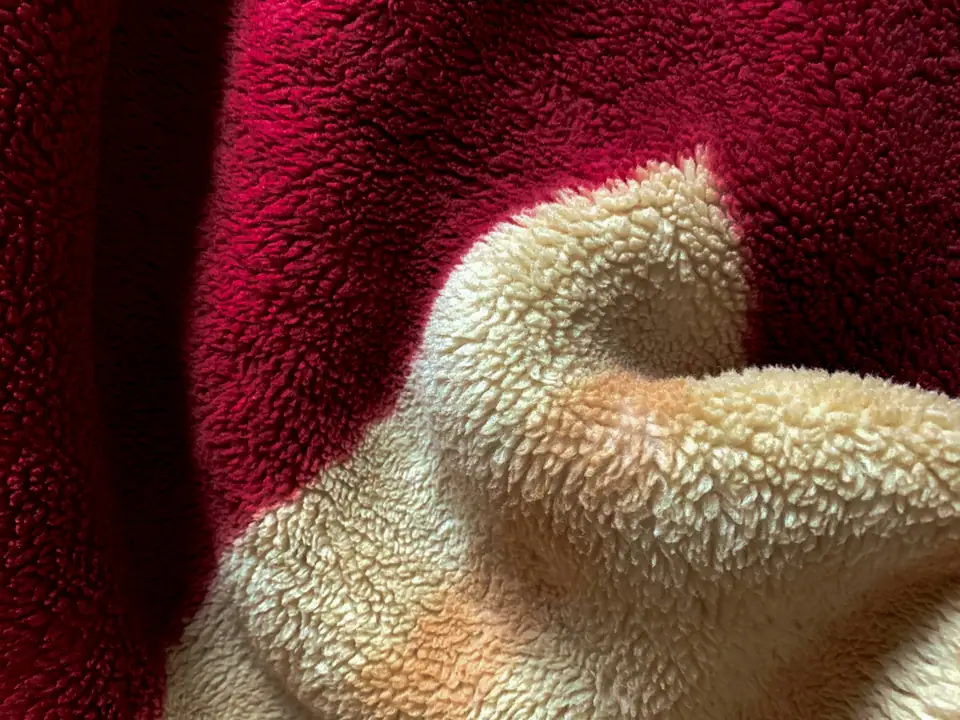
Sherpa is a knitted fabric with a curly pile on one side and a flat face on the other, designed to look like sheepskin. It is usually polyester or acrylic. The name began as a trademark of the American fabric maker Collins and Aikman.
Many sherpa throws are reversible. One side is sherpa, the other is a smooth plush, flannel or velvet fleece. That second layer adds thickness and weight compared with a single layer of fleece.
Pick sherpa if you want warmth without the upkeep of long faux fur. Care matters. Rumpl tells owners of its sherpa blankets to wash cold and tumble dry low on the gentlest cycle, or hang them. Heat is what turns soft curls into flat, crunchy clumps.
Sherpa, fleece and faux fur throws on eBay
Shop the range
Browse current throw blankets on eBay, new condition only.
Shop throw blanketsOpens eBay in a new tab. Check condition, seller feedback and returns on the listing.
Faux fur: the most dramatic, the most fragile
Faux fur is a pile fabric engineered to look and feel like fur. Makers use acrylic, modacrylic, polyester or nylon. Higher-end faux fur often blends acrylic with modacrylic.
U.S. rules define the two fibers by chemistry. Acrylic has at least 85 percent acrylonitrile by weight. Modacrylic has between 35 and 85 percent. Faux fur maker Fenrir Throws says modacrylic is inherently flame retardant and resists matting and shedding when cared for properly.
Pick faux fur if the throw is partly decorative: draped on a bed, a reading chair or a sofa that does not see muddy paws. It photographs well and holds a lot of warmth.
Know the tradeoff. Fenrir says most modacrylic faux fur should be dry cleaned, though some pieces allow gentle hand washing. Faux fur does not need cold storage and is not eaten by moths, but it should be stored away from heat, humidity and sunlight.
Safety
How to keep any plush throw soft
The makers we checked agree on four habits.
- Wash cold on a gentle cycle, and wash the throw on its own. Berkshire says washing separately keeps its plush fibers unmatted.
- Skip fabric softener and dryer sheets. Barefoot Dreams says both compromise the softness of its plush fabric.
- Dry on the lowest setting, no heat, or flat and air fluffed.
- Shake the throw out while damp so the pile dries upright.
How to read a throw listing before you buy
Names like “sherpa,” “plush” and “mink” are marketing words. The label tells you more.
Fiber content. U.S. rules set generic names for manufactured fibers, such as polyester, acrylic and modacrylic. A listing that gives percentages tells you what you are actually buying. A faux fur throw with modacrylic in the pile may carry dry-clean-only care.
Fabric weight or pile height. For fleece, a grams-per-square-meter figure is the best warmth clue, since the fabric runs from micro weights to around 300 g/m². For sherpa and faux fur, a pile height or a close-up photo of the edge shows loft better than a flat product shot.
Single or double layer. A reversible sherpa throw with a plush back is two fabrics joined together. That adds weight and warmth but also means longer drying.
Care label. If the label says line dry or no heat, plan for it. Makers of plush throws are consistent that heat and fabric softener are what wear the pile out first.
Which one should you buy?
Choose fleece for everyday, high-wash use and for anyone who runs warm. Choose sherpa for a reversible, warm sofa throw you can still machine wash. Choose faux fur for maximum loft and looks, and accept gentler care.
Still deciding? The throw blanket buying guide covers knit, wool, weighted and heated throws too. If warmth is the goal, a heated throw or a hot water bottle under a light fleece may beat any single fabric. And for a present, a sherpa throw is a staple of our cozy gift guide.
Frequently asked questions
Is sherpa warmer than fleece?
Usually, because sherpa's curly pile is deeper and traps more still air than a thin fleece. A heavy, high-loft fleece can close the gap. Compare thickness and fabric weight rather than the name on the label.
Is sherpa real wool?
Not normally. Sherpa is a knitted fabric made to look like sheepskin, and it is usually polyester or acrylic. Real sheepskin or shearling is a hide with the wool still attached.
Does faux fur shed?
Some faux fur throws shed loose fibers. Faux fur maker Fenrir Throws says modacrylic resists matting and shedding when cared for properly. Shaking a new throw outdoors removes loose pile before it reaches your sofa.
Can you put a sherpa blanket in the dryer?
Only on low or no heat. Rumpl says to tumble its sherpa blankets low on the gentlest cycle or hang them, and Berkshire recommends line drying or no-heat tumbling for its plush throws. High heat can mat the pile.
Which is best for someone who runs hot?
A light fleece throw is the easiest to shrug off and wash. Faux fur and heavy sherpa hold more heat, which is pleasant on a cold evening but can feel stuffy for a warm sleeper.
Sources
- Polar fleeceWikipedia
- Sherpa (fabric)Wikipedia
- Fake furWikipedia
- 16 CFR 303.7: Generic names and definitions for manufactured fibersLegal Information Institute, Cornell Law School
- What Is Modacrylic?Fenrir Throws
- Washing and CareBerkshire Home Company
- FAQs: Care and CleaningBarefoot Dreams
- Indoor Blankets careRumpl
Part of our guide to Best Throw Blankets: Sherpa, Knit, Faux Fur and Fleece Compared.